The Iran Crisis: A Silver Lining for the Green Hydrogen Movement

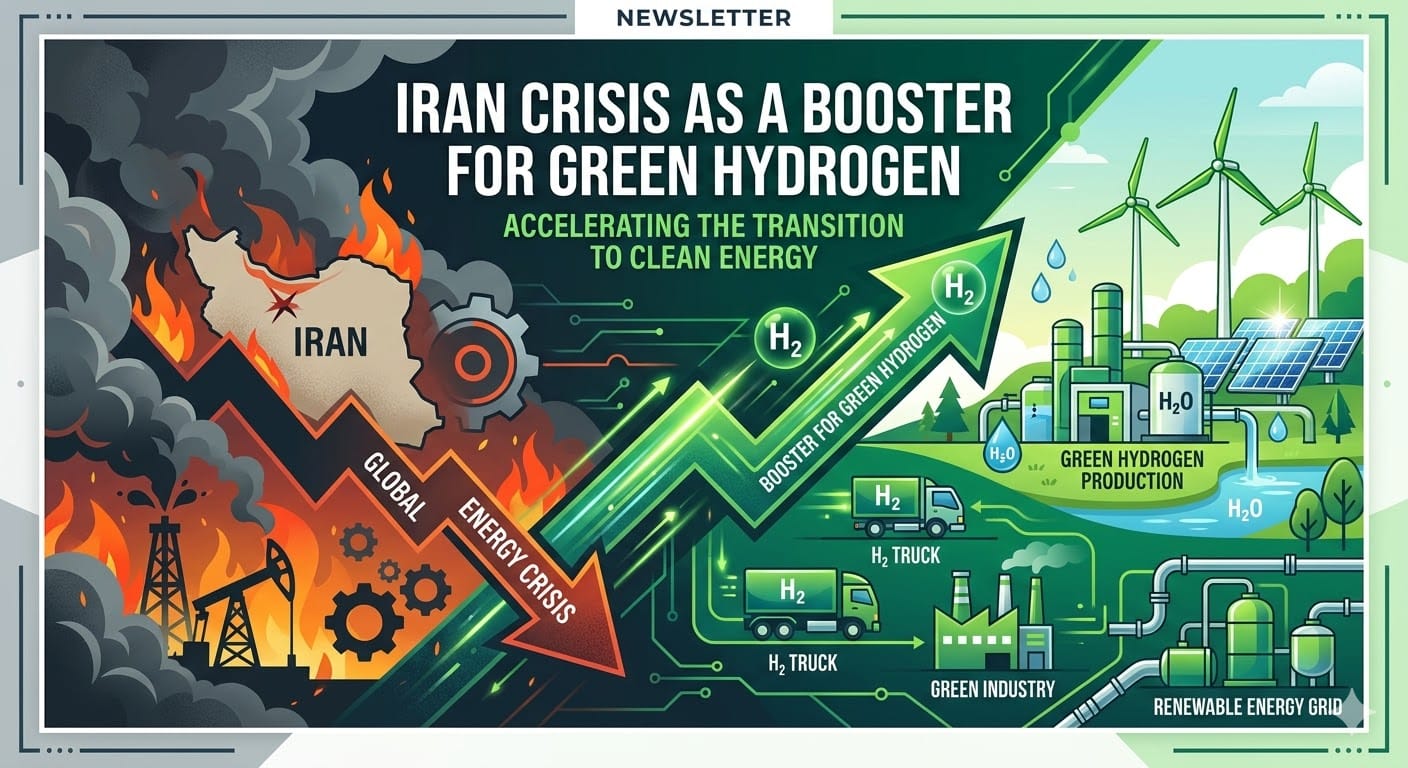
As the 2026 Iran war enters its fourth week, the world is confronting a stark energy shock. What began on February 28 with U.S. and Israeli airstrikes has escalated into a broader conflict, with Iran retaliating by effectively closing the Strait of Hormuz—the chokepoint that carries roughly 20% of global oil and liquefied natural gas supplies. Oil prices have surged past $100 per barrel (and briefly hit $120), gas markets are in turmoil, and supply chains from the Gulf are strained like never before.
It’s a human and geopolitical tragedy. But in the energy sector, crises like this have a way of revealing hidden opportunities. For the green hydrogen movement, this could be the silver lining we’ve been waiting for—a powerful catalyst to accelerate the shift away from fossil fuel dependence toward secure, homegrown, zero-emission energy.
The Wake-Up Call: Fossil Fuels’ Fragility Exposed
The numbers tell the story. Brent crude has jumped more than 50% since the strikes began. Shipping through the Strait of Hormuz has ground to a near-halt, stranding exports and forcing countries to scramble for alternative supplies at premium prices. Analysts warn this is potentially the largest oil supply shock in history, with ripple effects on inflation, industry, and households worldwide.
For decades, the global economy has treated Gulf energy as a given. No more. Policymakers from Beijing to Brussels to Tokyo are now openly rethinking long-term dependence on imported oil and gas. China’s state planner is urging faster renewable buildout and bigger strategic reserves. European leaders are calling decades of nuclear phase-outs “a strategic mistake” and fast-tracking new atomic projects alongside renewables. Japan and Taiwan are eyeing reactor restarts.
The message is clear: energy security is no longer just about diversifying suppliers—it’s about domesticating supply.
Why Green Hydrogen Wins in This New Reality
Green hydrogen—produced by splitting water using renewable electricity—stands out as one of the clearest beneficiaries. Here’s why the Iran crisis hands it a decisive advantage:
- Energy Independence, Not Geopolitics: Unlike oil or LNG, green hydrogen can be made anywhere there’s sun, wind, and water. Countries hit hardest by today’s price spikes (Europe, Asia, and import-dependent economies) are already eyeing massive domestic electrolysis projects. No more tankers through contested straits. No more exposure to regime changes or shipping lane blockades.
- Price Competitiveness Just Got a Boost: When fossil prices spike, the relative economics of green hydrogen improve overnight. Higher gas and oil costs make fossil-derived (grey/blue) hydrogen more expensive too, narrowing the gap for renewable H₂ in hard-to-abate sectors like steel, chemicals, heavy transport, and long-duration storage. Analysts at Hydrogen Insight and industry watchers note that turmoil in fossil markets is once again making renewable hydrogen “an attractive proposition.”
- Policy Momentum Is Accelerating: The crisis is already prompting concrete action. Governments are dusting off stalled hydrogen strategies, expanding subsidies, and fast-tracking permitting for electrolyzers and renewable power. The International Energy Agency’s stark warning about the “greatest ever energy threat” from this war is being read as a mandate for faster clean-tech deployment.
- Middle East Irony: Even Gulf producers—who have historically focused on blue hydrogen from gas—are now under pressure. Some are quietly accelerating their own green hydrogen ambitions (Saudi Arabia’s NEOM project, UAE targets, Oman’s pipelines) to future-proof exports and diversify before the next shock hits.
Real-World Momentum Building
We’re already seeing early signals:
- Import-heavy nations in Asia are signaling renewed interest in long-term green hydrogen contracts from stable producers like Australia, Chile, and North Africa.
- European utilities are revisiting canceled or delayed electrolyzer projects, citing energy security as the new justification alongside climate goals.
- Investors who cooled on hydrogen amid low fossil prices last year are circling back. Strategic stockpiling and domestic production are suddenly bipartisan priorities.
This isn’t theoretical. The 2022 Russia-Ukraine war delivered a similar (if smaller) jolt that turbocharged Europe’s hydrogen plans. The 2026 Iran war is bigger—and the lesson is sticking.
Not a Magic Bullet—But a Massive Tailwind
Let’s be clear-eyed. Green hydrogen still faces hurdles: high upfront costs, the need for massive renewable power buildout, and infrastructure for storage and transport. The transition won’t happen overnight, and not every application will make sense.
But the Iran crisis removes the biggest political obstacle of all—complacency. When your energy supply can be turned off by a single waterway closure, “maybe later” on renewables is no longer an option.
As one senior energy diplomat put it: “The issue of energy security has never been as acute as now. Markets took Gulf resources for granted. That will not be the case going forward.”
The Road Ahead
The green hydrogen movement has spent years proving its technical viability. Now geopolitics is handing it the ultimate marketing campaign: reliable energy that no one can blockade.
If policymakers follow through—accelerating permitting, unlocking financing, and treating hydrogen as core infrastructure—the silver lining could be brighter than anyone expected. The tragedy in the Middle East is painful. But it may just be the spark that finally propels green hydrogen from niche technology to mainstream energy backbone.
What do you think? Is your portfolio, company, or policy team ready to ride this wave? Drop your thoughts in the comments or reply to this edition—I read every one.
Stay informed. Stay hopeful.